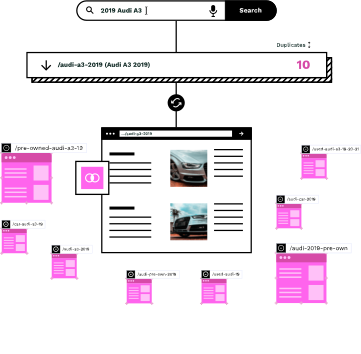
Why SEO cleanup should be your first priority
Every irrelevant or duplicate page dilutes crawl budget, confuses search engines, and splits the authority your best pages need to rank. Without content consolidation, the problem compounds as your catalog grows.
Duplicate pages cannibalize each other
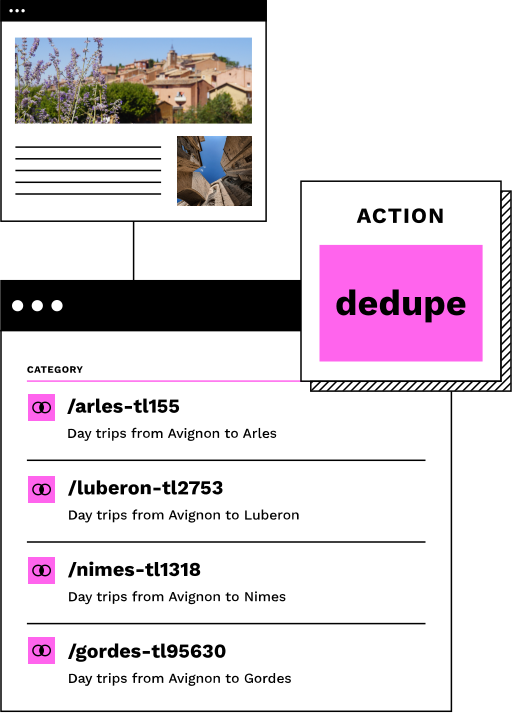
When multiple pages target the same topic, search engines have to choose. They often choose badly, ranking the weaker page or splitting authority so neither page ranks well. Deduplication solves this by merging overlapping pages into one.
Wrong-market listings confuse users
Category pages showing products from another country or region frustrate users who can't actually buy what they see. Search engines learn these pages don't satisfy intent and stop ranking them.
Irrelevant pages waste crawl budget
Pages where the product listings don't match the topic aren't just unhelpful; they consume crawl budget that should go to pages customers actually need. This means your best pages get crawled less often.
How the Cleanup Agent runs a continuous content audit
The agent analyzes your entire site structure, product catalog and search performance to surface the pages that should be hidden, redirected or consolidated. Think of it as an automated content audit that never goes stale.
Identifies topic overlap
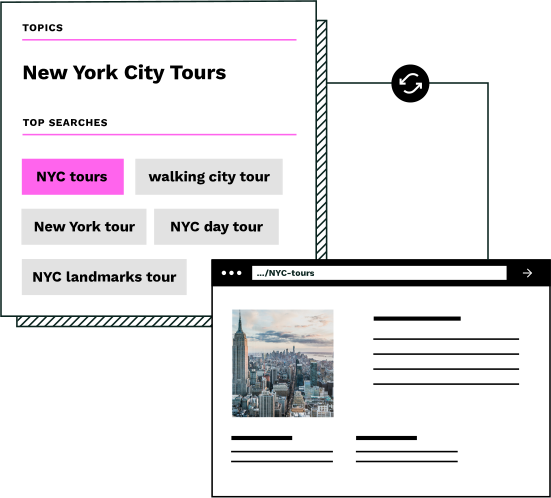
The agent maps every page on your site to the topics it targets, then finds where multiple pages compete for the same search intent. This goes beyond keyword-level matching: it identifies pages that mean the same thing to searchers, even when they use different words.
Checks product-to-topic relevance
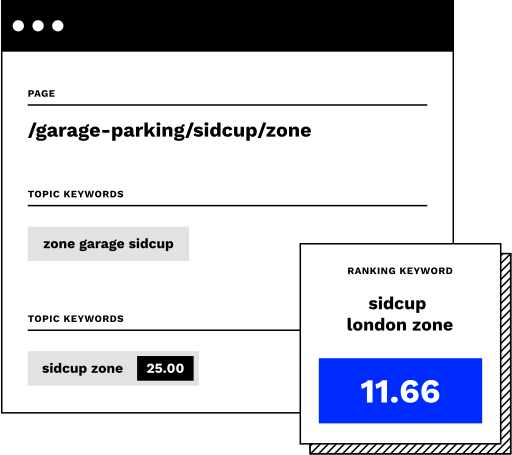
For each category page, the agent compares the products listed against the topic the page is supposed to serve. Pages where the listings don't match the topic are flagged as irrelevant because they're hurting user experience and search performance.
Detects cross-market listing errors
The agent identifies category pages showing products from other markets or regions. These pages mislead users with products they can't purchase, and search engines penalize the poor experience.
Delivers website consolidation changes
Each problem page is scored by its impact on your site's organic performance. The agent delivers structured instructions via API: consolidate into a stronger page, redirect to the canonical version, or remove entirely. You can review changes before they go live, or let the agent publish directly.
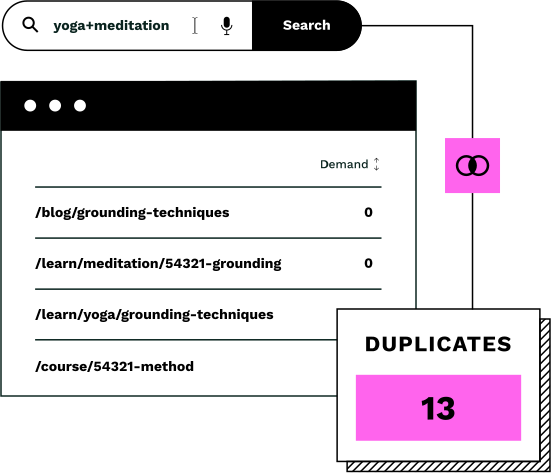
Three kinds of pages that need attention
These are the most common problems the Cleanup Agent finds on e-commerce sites. Most teams know they exist but lack the tooling to find and fix them systematically.
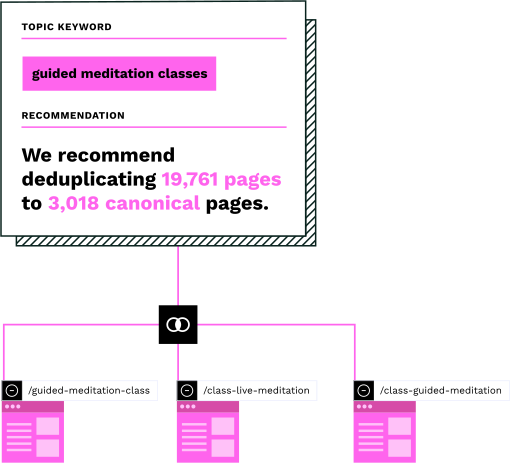
Duplicate and overlapping pages
Multiple category pages targeting the same search intent, often created over years of ad hoc taxonomy changes. The agent identifies which page to keep and which to redirect, preserving the strongest signals.
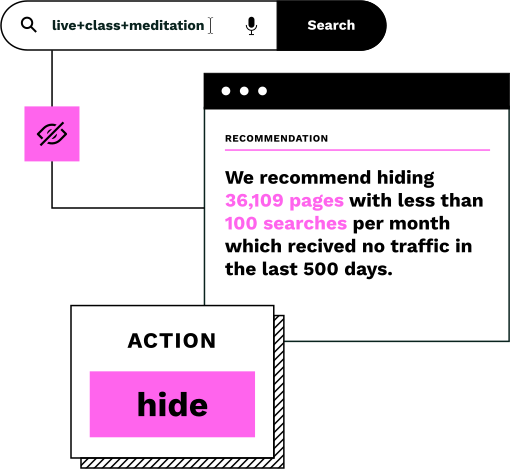
Irrelevant product listings
Category pages where the products don't match the topic. A “kitchen pendant lights” page showing bathroom sconces doesn't help anyone. The agent compares each page's products against its topic and flags mismatches.
Cross-market listing errors
Category pages showing products from other countries or regions. When a UK customer sees US-only products on a page, they leave. The agent detects market mismatches across your entire catalog.
Manual content audits vs the Cleanup Agent
Most teams tackle SEO cleanup once a year, if at all. The Cleanup Agent monitors your site continuously, so problems are caught before they compound.
Without the Cleanup Agent
- ×Manual crawls and spreadsheets to find duplicate pages (tedious, incomplete, and outdated within weeks)
- ×No systematic way to check whether product listings actually match the topic of each category page
- ×Cross-market listing errors go undetected until customers complain or bounce rates spike
- ×Cleanup decisions are subjective: which page to keep, which to redirect, which to remove entirely
- ×Engineering teams receive ad hoc redirect requests with no priority order or impact data
With the Cleanup Agent
- Continuous content audit finds duplicate and overlapping pages as your catalog evolves (not once a year)
- Product-to-topic matching flags every category page where listings don't match the page's search intent
- Cross-market listing errors are detected automatically across all regions and languages
- Every cleanup recommendation is scored by organic impact, so your team acts on what matters most
- The agent delivers ready-to-publish changes via API: redirect, consolidate, or remove (no manual spreadsheet work)
Website consolidation starts with how customers think
Most sites build their taxonomy around how the business sees its products. But customers don't search by internal category codes or merchandising hierarchies. They search by what they need.
The Cleanup Agent combines all the keywords that users consider interchangeable into topics, then checks whether your site structure matches. Where it doesn't, the agent recommends content consolidation: merging overlapping pages so one strong page serves each topic instead of three weak ones.
The result: fewer pages, each one more relevant, better linked, and more likely to rank.
Cleanup is the first step in a complete system
Page cleanup isn't a one-off project. The Cleanup Agent works alongside every other part of the Similar AI platform to keep your site healthy as your catalog evolves:
- •Topic Sieve filters candidate topics to ensure new pages are created only for genuine opportunities, preventing future bloat
- •Inventory Gaps identifies topics with search demand but no matching page, so link equity from cleaned-up pages flows to the right destinations
- •Internal Linking where the Linking Agent updates links after consolidation to point to the surviving canonical pages
- •A/B Testing measures the impact of cleanup actions on rankings, traffic and revenue so you can see what's working
Together, they form a closed loop: clean up existing problems, prevent new ones, and measure the results.
“Google wasn't sending traffic to most of our pages because they weren't relevant enough for users. Many didn't answer needs search engine users had, and sometimes there were thousands of pages for the exact same need. Similar AI let us clean up duplicate pages without spending a significant amount of time playing catchup and piling SEO tasks onto the engineering team.”
Jan-Willem Bobbink
SEO Specialist
Frequently asked questions
What is content consolidation?
Content consolidation is the process of identifying and merging duplicate, thin, or overlapping content into stronger, more authoritative pages that perform better in search. Similar AI's Cleanup Agents handle this automatically for e-commerce sites by detecting cannibalization issues and consolidating redundant product or category pages so your site's SEO equity is concentrated where it matters most.
How do you consolidate information about ideal customers in content marketing?
Similar AI's Cleanup Agents automatically audit your existing product and category pages to identify overlapping audience signals, redundant messaging, and gaps in targeting. By merging or redirecting duplicate content, the agents ensure each page speaks clearly to a specific customer intent rather than diluting your messaging across competing pages.
See which pages are holding your site back
Book a demo and we'll show you the duplicate, irrelevant and mismatched pages on your site, with data on how much they're costing you. Real data from your site, no commitment.